

Technical data
| Size | 14 | 16 | 19 | 22 | 25 |
|---|---|---|---|---|---|
| AUW* (kg) | 55/120 | 55/120 | 55/120 | 60/120 | 75/120 |
| Flat area (m) | 14 | 16 | 19 | 22 | 25 |
| Flat Aspect ratio | 5.2 | 5.2 | 5.25 | 5.9 | 5.9 |
| Cell Count | 40 | 40 | 40 | 49 | 49 |
| Weight (kg) | 3.15 | 3.4 | 3.7 | 3.85 | 4.10 |
| Certification** | LOAD test only | ||||
| PIlot level*** | Intermediate to advanced (sports)*** | ||||
* AUW = all-up weight, the total weight in flight.
** This wing has passed load test certification. It has not undergone EN or LTF flight certification, and so does not have these.
*** LittleCloud gives the Pilot Level / Category only as a rough guide to help choosing the right level of wing . This wing does not have EN flight certification. Pilot Level / Category may vary depending on wing size and loading.
How to choose your size?
Forget about all outside references: It’s not because pilots are flying a 18 than you need to go for the 19. You will have to be 100% honest with your experience/skill level. La Mouette have been designed to be very efficient so you don’t need to wait the wind is howling to go flying. Because of the very high capacity of depower and the extreme ease of use, you’ll be able to handle easily strong winds.
Flying above 35km/h requires skills and experience, despite the apparent ease if doing it with La Mouette and because the turbulence level have a much large spectre of variations. You have to understand that flying in turbulent conditions is possible when you know what you are doing and acting according to what is necessary to do. You have to understand that this upper part of the wind range is your margin i.e. your way out if the conditions are changing and you need to go to land. If you lack of experience, you will not be able to handle these conditions safely.
Remember that turbulences intensity and positions can change very quickly and are totally invisible!
Mouette 22 and 25
For wind from 10 to 20km/h.
It’s quite simple:
- < 85 kg all up weight, go for the 22
- > 85 kg all up weight, 22 or 25. The 22 will offer more speed and a sharper handling, but you will need more wind. The 25 will offer better float and efficiency.
Mouette 14, 16, 19
For a wind of 20 to 35km/h.
Of course it depends la lot on the terrain and its efficiency.
- < 60 kg all up weight: Mouette 14 or 16
- 60-80 kg all up weight: Mouette 16 or 19
- > 80 kg all up weight: Mouette 19
For wind above 35km/h (experienced pilots only!).
This part of the windrange is only accessible to experience pilots (unless you are under supervision).
- < 60 kg all up weight: you will be in the very upper range of the 14
- 60-80 kg all up weight: Mouette 14
- > 80 kg all up weight: Mouette 14 or 16
Tips
You can easily measure the margin left over with your toggles position to the C Pulley.
In your learning process, you can set up the limiter at 50 to 100mm to avoid getting the full speedrange and therefore reducing the possibility to go over your capacities.
Warning
The technologies used to push the stability forward are not transforming turbulent air mass into super homogenous air mass.
When you start to experiment tip tucking, this is the signal that you are flying conditions you are not able to handle, or your active piloting is not at level, or the air is really too much turbulent.
In any case, this is a warning you shouldn’t ignore.
Wind range guide
It is extremely hard to give an accurate wind range table. It depends a lot on the spot configuration, the pilot skills, the altitude… LittleCloud could go crazy in showing what wthey’ve been able to do, but they want to stay on the safe side.
With time you will learn your wing and know how far you can go with it! Bear in mind that the windspeed is the actual windspeed on the sea or in the air (the one showed by the weather prediction), not on the take off with compression effects! Also these ranges are with the stopper fully released.
The table below indicates the maximum wind speeds in kilometres per hour (km/h) by wing size (rows) and all-up flying weight in kilograms (kg) (columns).
| Weight | 55 kg | 65 kg | 75 kg | 85 kg | 95 kg | 105 kg | 115 kg |
|---|---|---|---|---|---|---|---|
| Size 14 | 30 km/h | 33 km/h | 35 km/h | 40 km/h | 45 km/h | 50 km/h | 55 km/h |
| Size 16 | 25 km/h | 28 km/h | 30 km/h | 35 km/h | 40 km/h | 45 km/h | 50 km/h |
| Size 19 | 20 km/h | 23 km/h | 25 km/h | 30 km/h | 35 km/h | 40 km/h | 45 km/h |
| Size 22 | – | – | 20 km/h | 25 km/h | 30 km/h | 35 km/h | 40 km/h |
| Size 25 | – | – | – | – | 20 km/h | 25 km/h | 35 km/h |
Colours
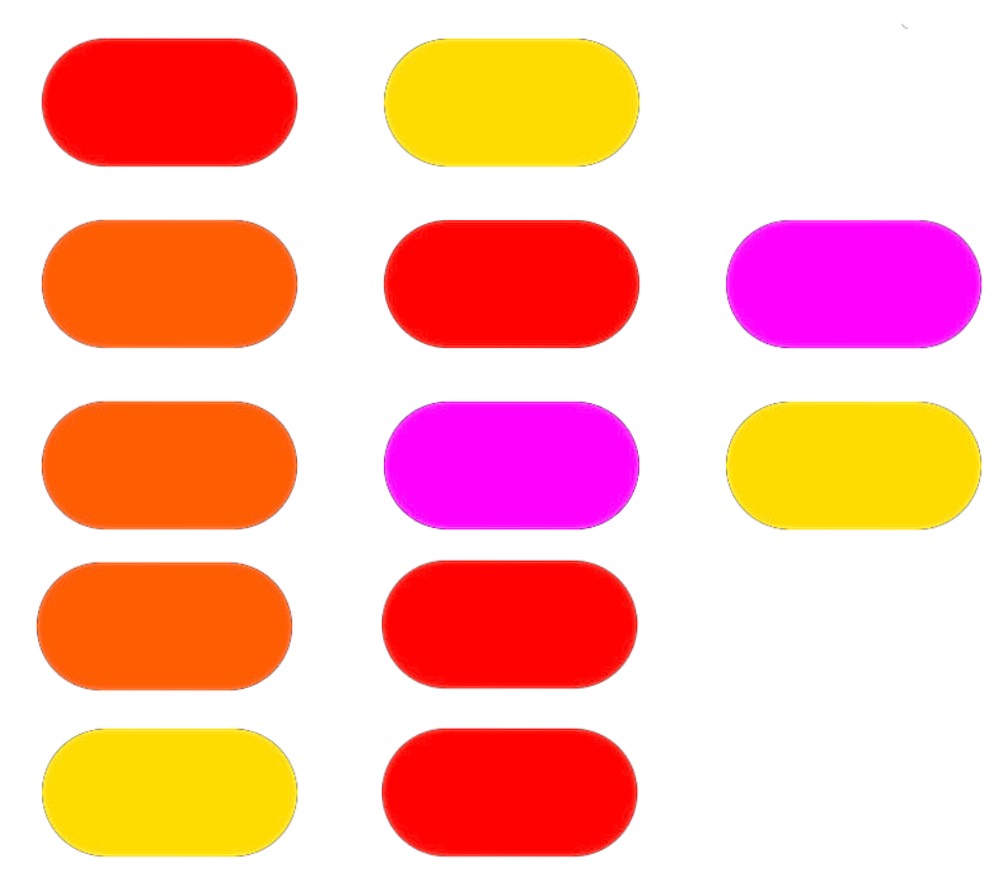
The table below shows the the standard size/colour combinations for La Mouette, which LittleCloud typically keeps in stock. If you choose to order a non-standard size/colour combination, we’ll contact you to confirm availability, expected delivery time and any extra cost.
| Size 14 = Red, Yellow
Size 16 = Orange, Red, Pink Size 19 = Orange, Pink, Yellow Size 22 = Orange, Red Size 25 = Yellow, Red |
 |
|---|
Package
- Wing
- Kiterisers
- Simple and light fast packing bag
- Compression strap
- Manual
- Control sheet
La Mouette: The ultimate Kiterisers glider
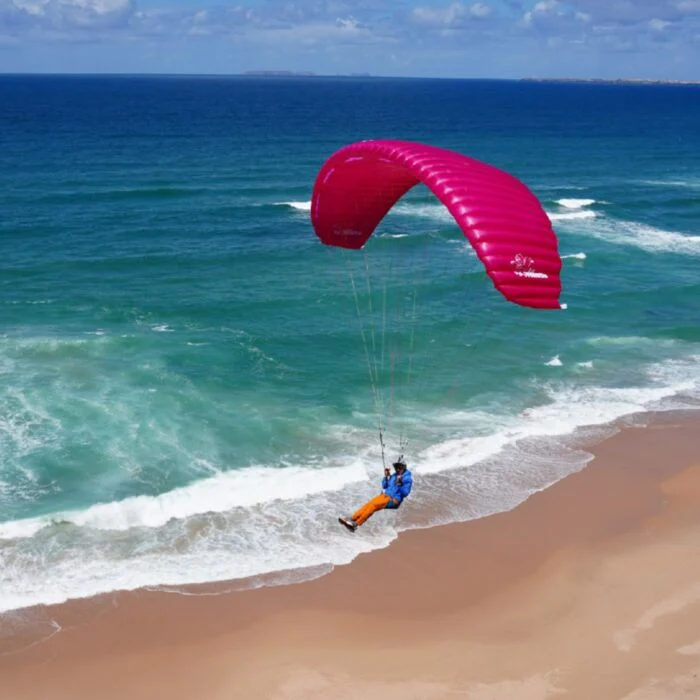
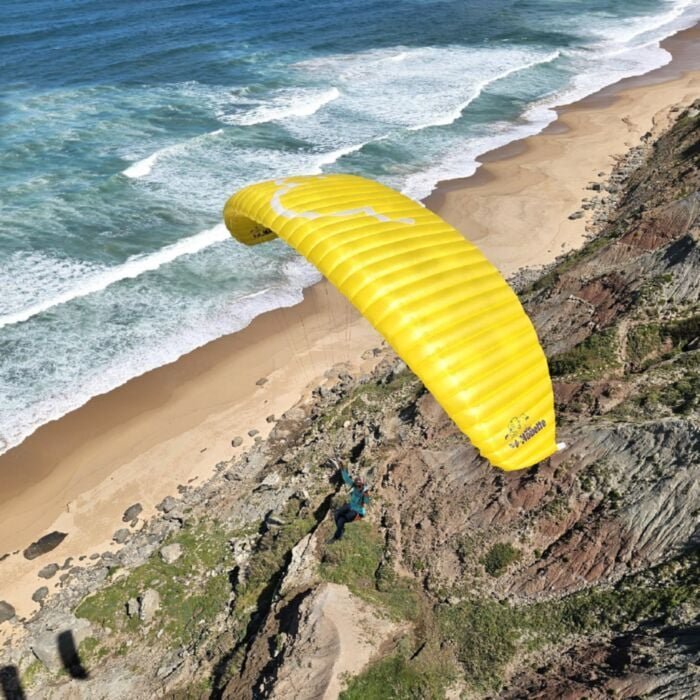
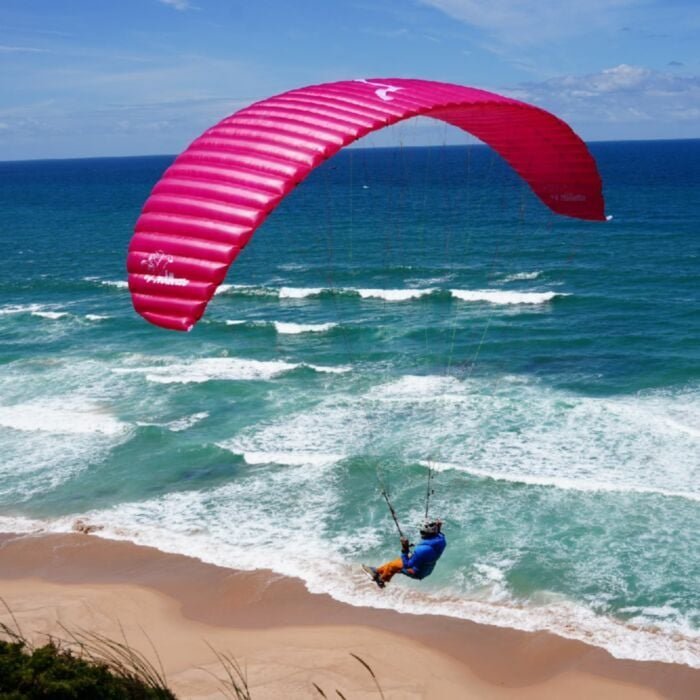
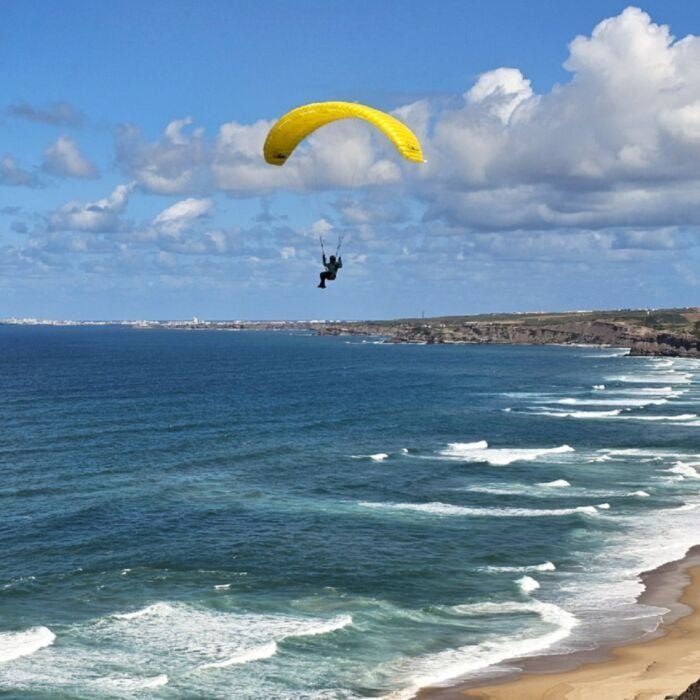
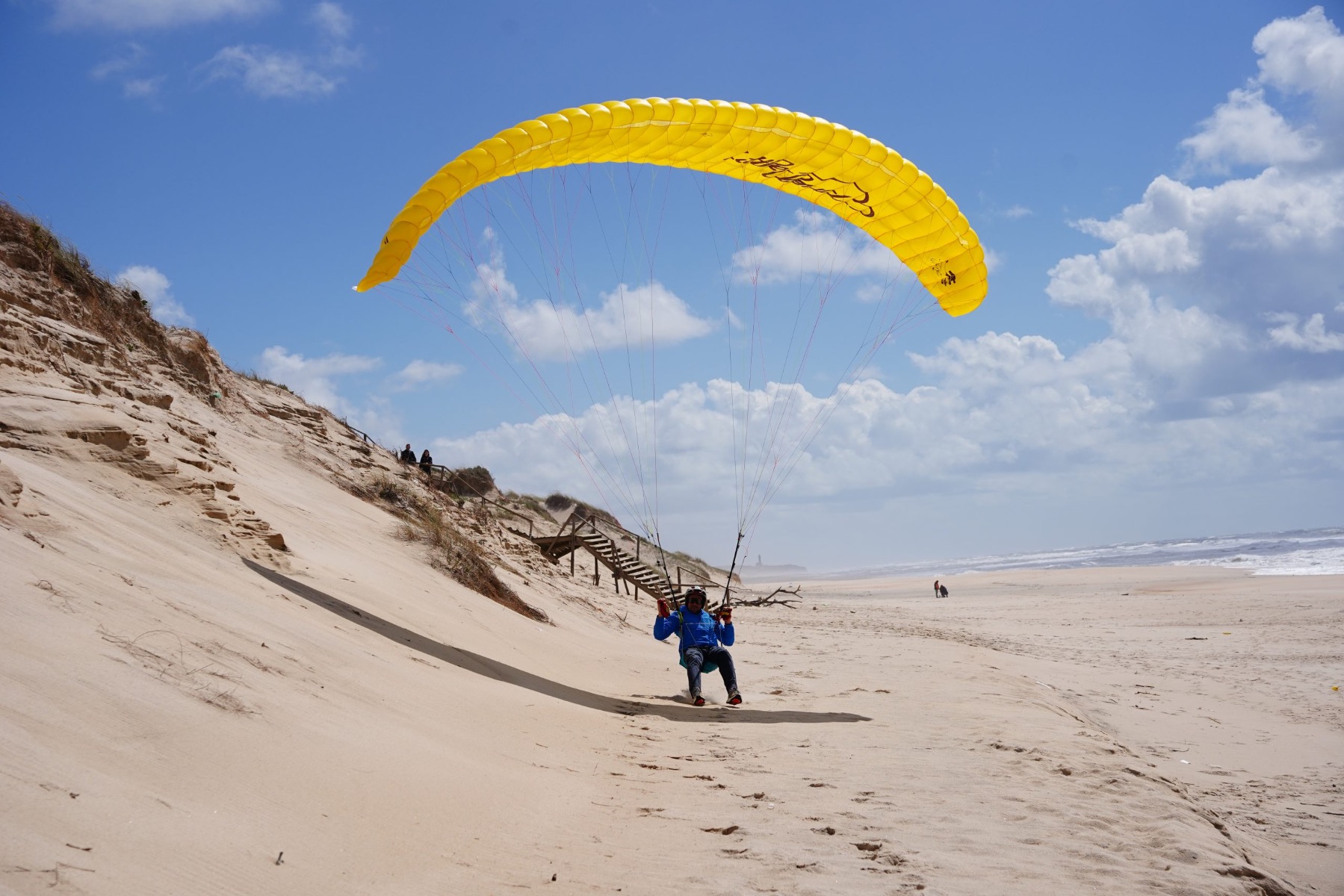
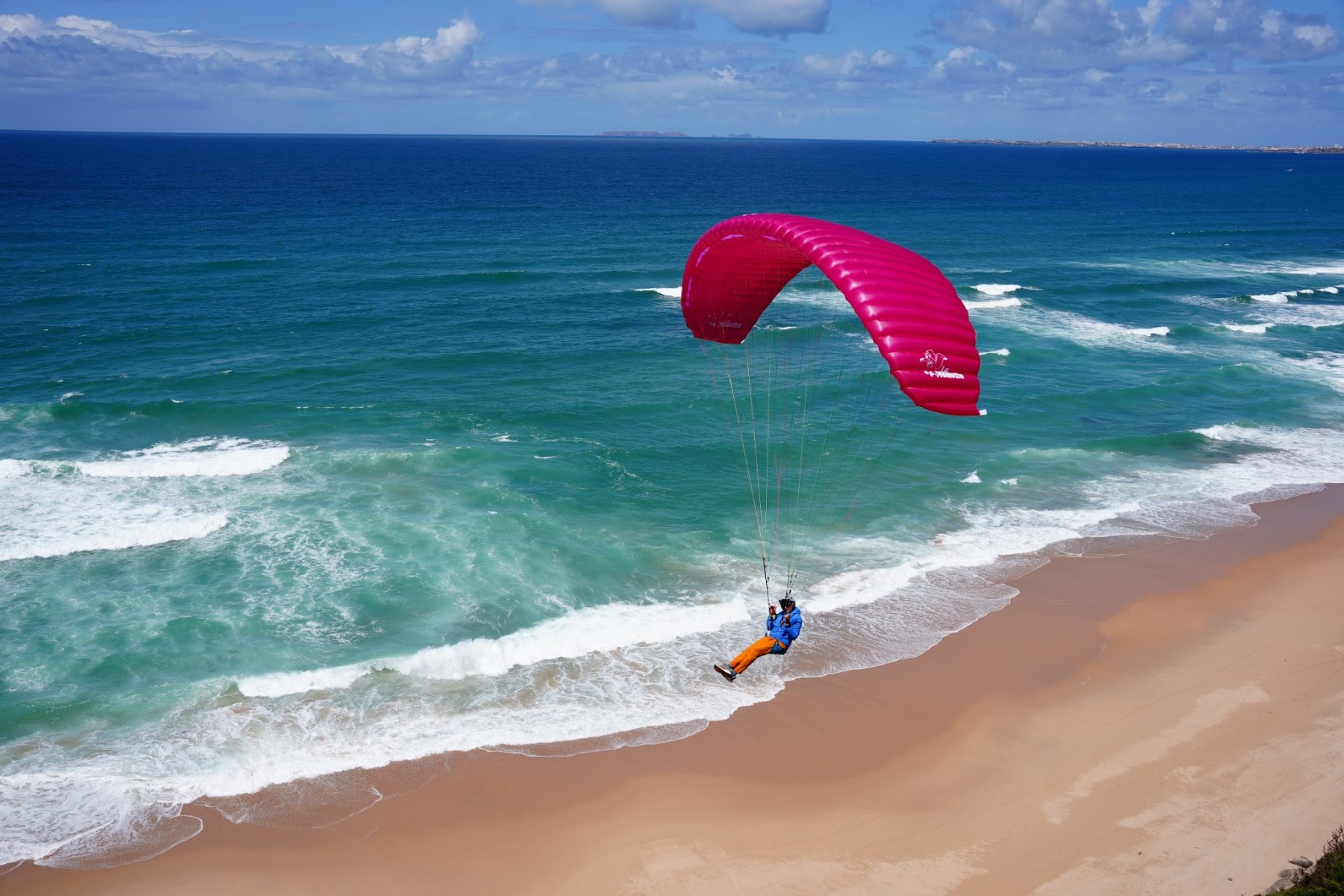
La Mouette, the seagull in French is the Kiterisers specific glider from LittleCloud. A soaring machine designed to be used with the angle of attack control though the toggle-what they call Kiterisers, ie speed-control at your fingertips.
It benefits from Tom’s 25 years’ experience in Miniwing and Kite design! Extremely intuitive, easy to use, fun to pilot, it will put a big smile on your face!
Whether you’re looking for a smooth comfortable ride or more aggressive flying, it’s suitable to a large range of flying styles thanks to its extremely precise and progressive control.
The range is divided into 2 groups:
- The light wind glider-designed to let you enjoy the lightest breezes of air. With 5.9 aspect ratio, LitteCLoud is focused on efficiency and handling. Everything is optimised, from the planform to the fabric blend to offer you the best experience in the air.
- The medium to stronger wind gliders so you can play when the wind picks up. With 5.2 aspect ratio, LitteCLoud is focused on extremely precise handling with very neutral and instant reactions.
Design
As always LittleCloud rose up the design expectations… making a glider that just works isn’t enough for them!
The challenge was to keep the LC feeling, but add more stability at low angles of attack while keeping very high efficiency with of course a very high level of safety (still, Safety comes from both the glider and the pilot). Stability is one key point, but not the only one.
La Mouette is not design with an “Auto pilot” mode. As any aircraft with human onboard, it need a pilot that fly in conscience.
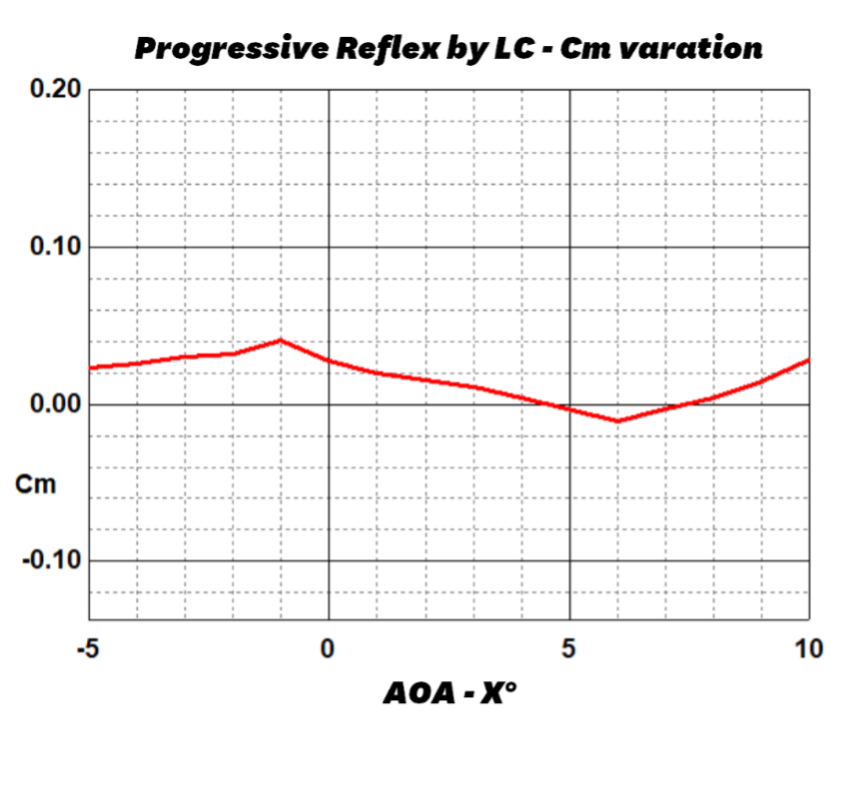
Progressive Reflex by LC..
Using a strong reflex profile is one solution to make gliders very stable, but it has 3 strong downsides: lack of feeling, poor efficiency, and a very sudden stalling behaviour. They’ve been redefining the Reflex effect in controlling the Cm curve (reflex effect in short) to adjust it when you need and not all the time.
LittleCloud Progressive Reflex Profile is seeing its Cm increasing when the angle of attack is decreasing (as well as when the speed increase). In short, the more you accelerate, the more stability you get from the profile.
With a very efficient profile, LittleCloud are able to keep the aspect ratio moderate, so more accessibility to use smaller sizes which is easier to handle in stronger wind. Better handling = more fun!
They’ve successfully managed to reduce brake pressure.
On top of this, with this magic airfoil, even at the top of the windrange, you will always be able to stay in control! Your canopy will never take control of you anymore (ok, unless you really mess up)!
Semi Closed cell technology.
This transfer from some of Tom’s kite design technology into this glider helps efficiency by improving the Leading Edge airflow and the inside pressure of the canopy. Parasitic movements are reduced, therefore efficiency rises up!
The location of the open cells and their dimensions are calculated to not decrease the safety features of the glider. The total area of the inlets is reduced by 33% compared to a regular LC glider.
This is still more than enough for the canopy to inflate properly, or re-inflate if a collapse occurs. This regulates the inflation speed which at the top of the range makes the rise much less powerful and much more comfortable and safe. On top of all that, they found that it looks really cool too.
Light by essence.
As always, LittleCloud’ve been focusing on solving design problems at the roots. This results in a very simple canopy, with just what is needed to work efficiently, safely, and in a very intuitive mode. Light, low volume, so you can bring them with you anywhere without needing too much room! No compromise on durability has been made, thanks to their huge experience on soaring glider design.
Kiterisers
The Kiterisers have been developed with the best material on the market (Ronstan Orbit block, dyneema/Kevlar webbing blend). You can control your angle of attack with your hands, instantly. That means you can adjust your speed and the power of the glider at any time. The design mixes a very stiff A riser and soft dyneema rope for the rest. This offers a great ease of use and reduces tangling problems on preparation. The Kiterisers have an adjustable limiter so that every pilot can adjust the hands up position during their learning process.
LittleCloud also implemented a solution to get 3 positions for the T bar to improve the ergonomics for smaller sized pilots. The handles are flashy red so you can locate them in the blink of an eye.
Technical Specifications
What is Reflex?
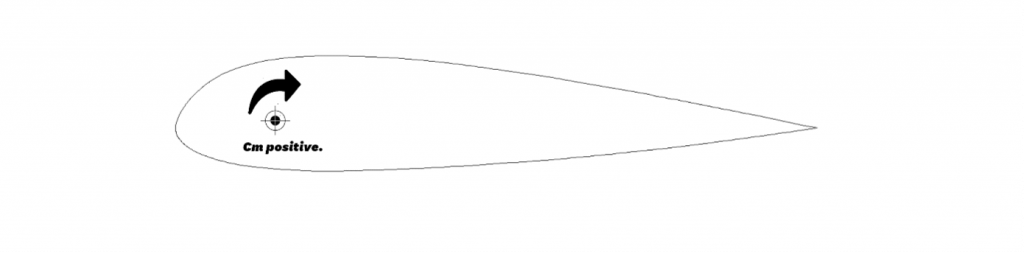
Reflex is a general word for a profile that defines a natural tendency to increase its angle of attack at a certain point. Just like cars, there are large variations of reflex profiles which are determined by a factor: the Cm.
The Cm is the momentum of the profile. This momentum tends to naturally rotate the profile if you leave it free in an airflow. When it’s positive, it tends to naturally increase its angle of attack: the Stronger the value, the stronger the reflex effect.
The stronger the Cm, the more stable the profile is. Strong stability means extreme damping of the air and not transmitting the small variations of the airflow (turbulence). The Cm value changes along the angle of attack range, and along the speed of the airflow (Most of the time, it increases when the airflow speed increases).
Generally, strong Cm profile have very poor self-recovery properties.
Why an efficient profile is important?
You can reduce the cell count, so production is easier and the glider is lighter. You can stay with a moderate Aspect ratio, so more accessibility, more handling, better progression in the angle of attack variation along the toggle’s travel. You can reduce the area which again increases the handling, is more fun, and makes a much easier canopy to control/manage in the upper part of the windrange. The glider is also lighter! You feel better when the glider is entering into a deepstall, so less chance of getting surprised when landing in a wind gradient.
Why do you need to feel the air you are flying?
For your safety, relaying on a strong reflex profile is a gamble as you will not feel when the glider will collapse as any ram air canopy will collapse at some point! To fly active and safe, you need to feel the variation of the invisible air mass through your toggles and through your harness… just like you look at the road when you are driving. You can react much faster. You can fly in more turbulent conditions if your active piloting skills are good enough.
Testing
LittleCloud’ve been testing the gliders in various configurations but they also pushed the test fights with some of theirs “in house” test process. For this they’’ve equipped some gliders with regular risers in order to check the behaviour during collapses.
Handling has been fine-tuned and thanks to LittleCloud’s Progressive Reflex airfoil, they’ve succeed in reducing the brake pressure when you hold your glider around trim speed (hands low). Also, La Mouette has been load tested.
One important part of the testing was regarding the deepstall. Because of the lighter pressure in the toggles, it’s “easier” to go too far down with your hands and end up in deepstall (then fullstall if you keep going).
They made sure that this point comes clearly to the pilot and that the glider reacts instantly when the pilot rises their hands to get back to flight. For experienced pilots this gives the opportunity to play with the deepstall to top land for example.
Warning, the very high stability of the airfoil and the wing only postpones the moment when it can collapse.
After all LitleCloud tests, their flight hours with the different machines, they believe that La Mouette offers a very high level of passive safety, but bear in mind that only the awareness/consciousness and behaviour of the pilot are the real protection against incidents/accidents.
LittleCloud Philosophy & Certification
It all started in 2008… with Tom’s vision of being able to enjoy flying as much as possible, all year long, and with maximum pleasure, LittleCloud was born. Pleasure, it seems, is something that is often lost in flying… because of the never-ending quest for performance and maximum distance. It has become their mission and philosophy at LittleCloud to deny this quest and focus their efforts on creating products for a community of pilots that pursue the pleasure of flight
A while back, LittleCloud chose to opt out of the flight certification game, except for tandem wings.
TOP/BOTTOM
- 20D DOMINICO
- 22&25-20D/10D
RIB
- PORCHER 32GR HARD FINISH
SUSPENSION (LINES)
- UPPER/MID EDELRID 7850
LOWER EDELRID 7343 - 22&25-DC60 upper lines
| size |
14 ,16 ,19 ,22 ,25 |
|---|---|
| color |
Orange ,Pink ,Red ,Yellow |


Reviews
There are no reviews yet.